
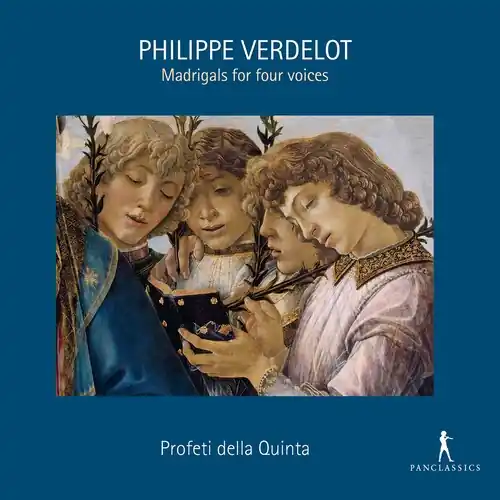
Buy Today Madrigals for Four Voices
Original price was: $20.99.$10.49Current price is: $10.49.
DISC: 1
| 1. Se L'ardor Foss'equale |
| 2. Se Mai Provasti Donna |
| 3. Gloriar Mi Poss Io Donne |
| 4. Igno Soave |
| 5. Io Son Tal Volta (Arr. For String Ensemble) |
| 6. Divini Occhi Sereni |
| 7. Trist'amarilli Mia |
| 8. Ognor Per Voi Sospiro |
| 9. Madonna Qual Certezza |
| 10. Madonna Per Voi Ardo |
| 11. Se Dimostrarvi A Pieno (Arr. For String Ensemble) |
| 12. Si Lieta E Grata Morte |
| 13. Deh Perche Si Veloce |
| 14. Quando Amor I Begli Occhi |
| 15. Non VI Fidate O Simplicetti Amanti |
| 16. Con Lagrime Et Sospir (Arr. For String Ensemble) |
| 17. Fuggi, Fuggi, Cor Mio! |
| 18. Con Soave Parlar |
| 19. Passer Mai Solitario In Alcun Tetto |
| 20. Benchè'l Misero Cor (Arr. For String Ensemble) |
| 21. La Bella Man Mi Porse |
| 22. Gran Dolor Di Mia Vita |
Powered by Broadtime Tuneportals
More Info:
Philippe Verdelot played a very important role in the development of the madrigal during the Italian Renaissance. Born in France, he probably moved to Italy at a young age. From 1522 onwards, he held the most important positions in church music in Florence – first he was maestro di capella at the Baptistery of Florence Cathedral, and a year later also at the Cathedral itself. After 1530, with the riots surrounding the expulsion of the Medici family and the siege of the city, all biographical traces are lost, and no works created after these events seen to have survived. In the years before, however, Verdelot had initiated important musical developments with his madrigals, which at that time were the most published in Italy. The Ensemble Profeti della Quinta presents a selection of four-part madrigals from an anthology published posthumously (1540, 1565). A special feature of their performance is that each singer reads from the originally notated single voice – unlike in a modern score with parts notated one above the other. The musicians must therefore listen to each other much more closely and be able to react spontaneously. This spontaneity can be felt throughout the recording, and takes the listener to the beginnings of the Italian madrigal in a very intense way.
Related products
-
Sale!

Birthplace Hassle-Free Returns
Original price was: $13.98.$6.99Current price is: $6.99. Add to cart -
Sale!
Crafted Spectro Verdu Est Mort
Original price was: $18.98.$9.49Current price is: $9.49. Add to cart -
Sale!

Clearance Bilateral
Original price was: $23.99.$11.99Current price is: $11.99. Add to cart -
Sale!

Bloodless Coup Buy Direct
Original price was: $13.99.$7.00Current price is: $7.00. Add to cart